Dreaming Bread and Flourishing Folklore
‘I’ll do it,’ she said. ‘I’m very happy to have shortbread broken over my head… I can think of worse things.’
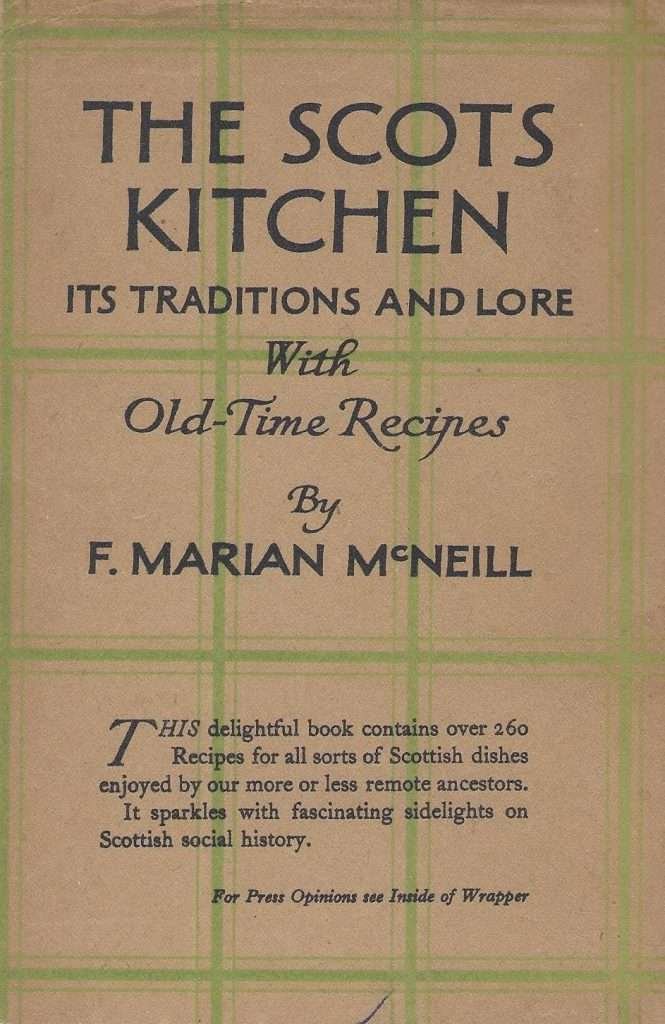
The shortbread – dreaming bread – round, encrusted with almonds, fresh out of the tin, baked the night before according to Florence Marian McNeill’s instructions in The Scots Kitchen (1929), shivered a little and started to show signs of a crack routing across its top as the woman spoke. I paused, but the prescience of McNeill’s belief in the significance of the folklore attached to food, alongside my own firm belief that produce farmed with care and consideration by people, grown from our land, crafted into ingredients, baked into symbolic foodstuffs, is beholden to the seasons and the days that it honours, and the opportunity to play with this time-worn ritual with this engaged and enthusiastic audience, was too bewitching.
I held the dreaming bread aloft and broke it, as The Scots Kitchen instructed, over the woman’s head. Did it have the potential for having cellular knowledge of her hidden future, her fate as the audience now ascertained it might?
It broke down the fault line, into two. After a moment’s hesitation the bigger piece split again. Then the smaller piece, as if on reflection, also split.
She laughed. She had two children with her first husband, she said, and although recently remarried she had no plans for more children. The rest of the audience participating in this enactment all oooh-ed and smirked knowingly, certain that the decorated treat had indicated a different future.
I picked up my gran’s copy of The Scots Kitchen later that evening and went back over what I thought were familiar passages…
The Infar-Cake or Dreaming-Bread. A decorated cake of shortbread is still the national bride’s cake of rural Scotland. The breaking of the Infar-cake over the head of the bride, on the threshold of her new home, is a very ancient custom, having its origins in the Roman rite of confarratio… Portions were distributed to young men and maidens ‘to dream on’.
There had been no mention of predicting marriages or children. I went back over my own notes from the evening workshop in which the dreaming bread ritual had been enacted. Sure enough, the future foretelling elements had been dreamt up, so to speak, by the audience as the shortbread had been shared. I smiled internally – intangible heritage, oral storytelling and folklore reminiscence is fluid in nature, ever changing, determined in part by the folk practicing its dark arts and listening to its loose design…
You can read the full article here in The Bottle Imp, issue 35 ‘The Land O’Cakes
